What Is an FVG in Forex and How Can Traders Use It?
The Forex market offers a wide range of techniques and tools for identifying potential trading opportunities. One concept that has become increasingly popular among traders who study Smart Money Concepts, or SMC, is the FVG, which stands for Fair Value Gap.
This technique helps traders identify the “footprints” left behind by major market participants on a price chart. This article explains in simple terms what an FVG in Forex is and how traders can incorporate it into their trading strategies.
What Is an FVG in Forex?
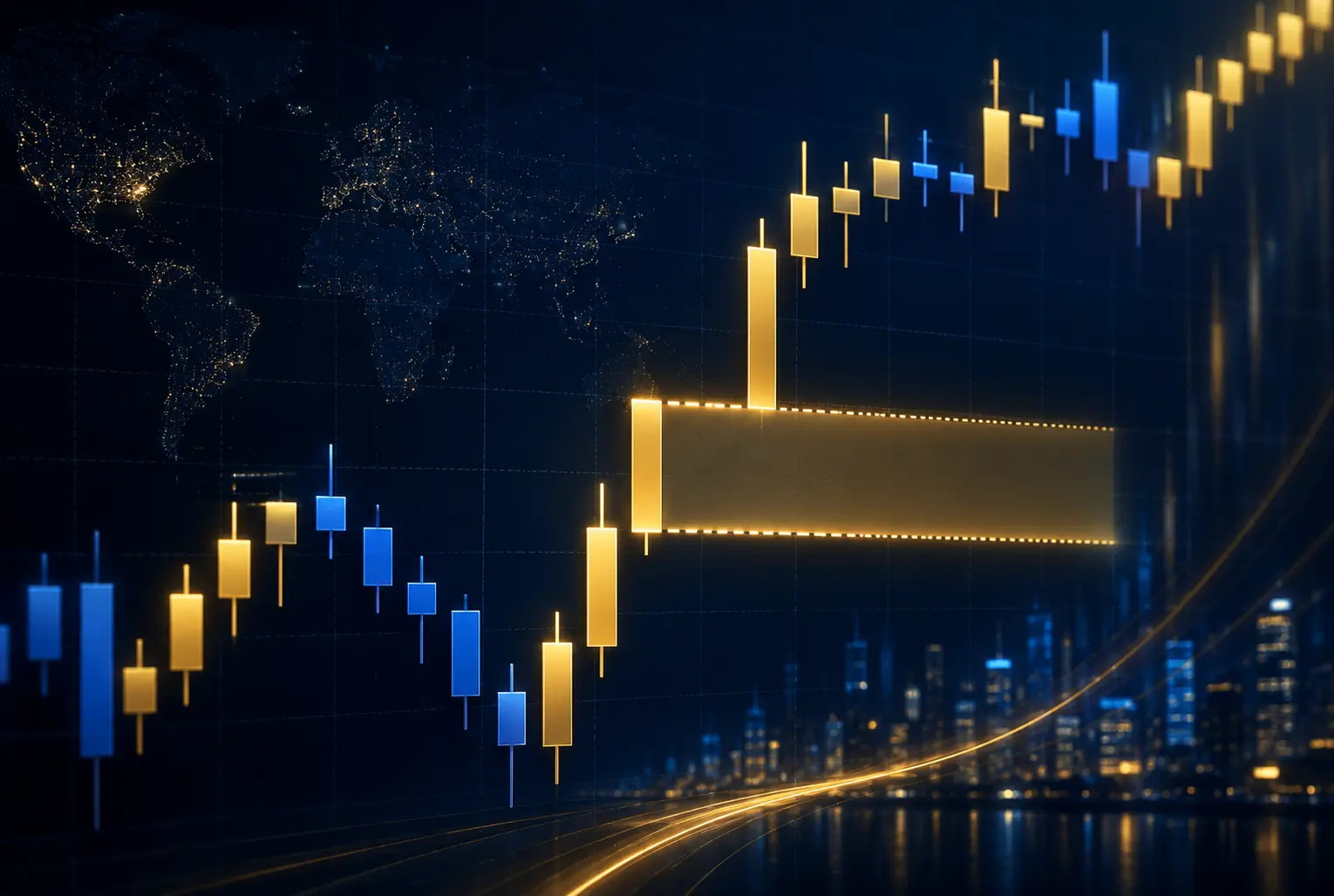
An FVG in Forex is a price gap or imbalance that appears on a chart when the market moves upward or downward so rapidly and aggressively that buying and selling pressure become unbalanced.
Imagine price moving up a staircase but moving so quickly that it skips one of the steps. The skipped step represents the FVG, or Fair Value Gap.
In practice, an FVG is not always a traditional visible gap between candles. Instead, it is an area where price moved so quickly that there was limited trading activity between buyers and sellers.
How Does an FVG Form in Forex?
An FVG forms when the market experiences a significant imbalance.
Under normal market conditions, price moves as buy and sell orders are matched. However, when a sudden and unusually large number of orders enters the market on one side, price may move sharply in a particular direction.
This may occur during major economic news announcements or when large financial institutions execute significant transactions.
Because price moves so quickly, little or no trading may take place within certain price ranges. This leaves behind an imbalance on the chart known as a Fair Value Gap.
In other words, a Fair Value Gap represents an area where the market temporarily lacked balance and efficient price delivery.
Types of Fair Value Gaps
Fair Value Gaps can generally be divided into two main types based on the direction of price movement.
Bullish FVG
A Bullish FVG forms when price rises aggressively.
It is commonly identified using a three-candle structure in which there is a gap between the high of the first candle and the low of the third candle. The second candle is usually a strong bullish displacement candle.
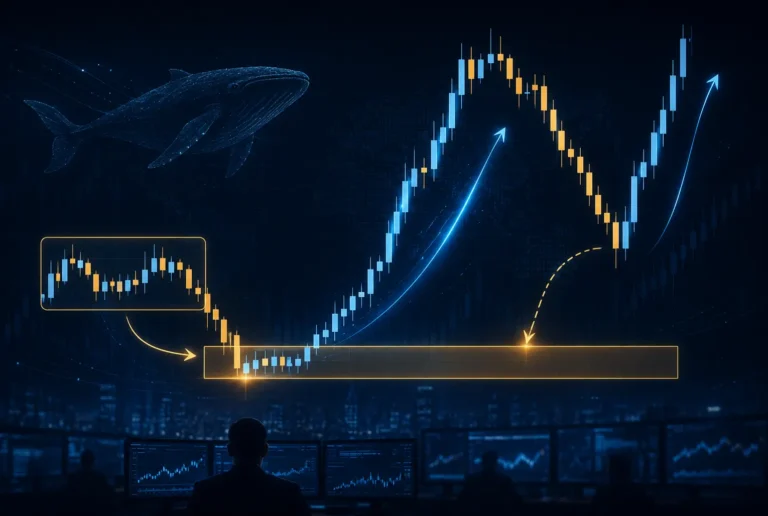
This gap is located below the current market price. Traders often expect price to retrace into the Bullish FVG before continuing upward.
For this reason, the area may act like a magnet that attracts price back for a retest before the bullish trend resumes.
Bearish FVG
A Bearish FVG forms when price falls aggressively.
It is commonly identified using a three-candle structure in which there is a gap between the low of the first candle and the high of the third candle. The second candle is usually a strong bearish displacement candle.
This gap is located above the current market price. Traders may expect price to retrace upward into the Bearish FVG before continuing downward with the prevailing trend.
Forex Trading Strategies Using FVGs
Once an FVG zone has been identified, traders can use it in several different ways.
Using an FVG as an Entry Point
This is one of the most common methods of trading an FVG.
The trader waits for price to retrace into a previously identified FVG zone and then looks for an entry in the direction of the original trend.
For example, during an uptrend, a retracement into a Bullish FVG may provide an opportunity to look for a Buy entry.
During a downtrend, a retracement into a Bearish FVG may provide an opportunity to look for a Sell entry.
Using an FVG as a Price Target
An unfilled FVG can also be used as a potential price target.
For example, when a trader already has an open position and identifies an unmitigated FVG ahead of the current price, the trader may use that zone as a potential Take Profit target.
This is based on the idea that price may be drawn toward areas of imbalance and return to trade through them.
However, traders should not assume that every FVG will always be completely filled.
Combining FVGs with Market Structure
FVG analysis becomes more effective when combined with Market Structure.
A simple principle is to trade in the direction of the prevailing trend.
When the market is in an uptrend, traders may focus primarily on Bullish FVGs and look for Buy opportunities. When the market is in a downtrend, they may focus on Bearish FVGs and look for Sell opportunities.
This approach can help filter out lower-quality signals and improve the probability of entering trades that are aligned with the broader market direction.
How Professional Traders Use FVGs
To improve the quality of their setups, experienced traders often combine FVGs with other concepts and confirmation signals.
Combining FVGs with a Liquidity Grab
Fair Value Gap analysis may become more precise when combined with a Liquidity Grab, particularly within clear uptrends and downtrends.
FVG and Liquidity Grab in an Uptrend
The process begins by identifying a strong displacement candle or imbalance that creates a Bullish FVG.
The gap is marked from the high of the first candle to the low of the third candle.
If price later retraces into the gap and performs a Liquidity Grab within or near the FVG, the area may provide a favourable Buy setup.
A Stop Loss may be placed below the Liquidity Grab or at another technically valid level based on the trader’s predetermined risk tolerance.
FVG and Liquidity Grab in a Downtrend
The bearish approach follows a similar process.
The trader first identifies a strong bearish displacement that creates a Bearish FVG. The gap is marked from the low of the first candle to the high of the third candle.
If price retraces into the FVG and performs a Liquidity Grab within or near the zone, the area may provide a favourable Sell opportunity.
A Stop Loss may be placed above the Liquidity Grab or at another suitable level based on the trader’s risk-management plan.
Combining FVGs with Price Action
When no clear Liquidity Grab occurs inside an FVG, traders may use Price Action signals to confirm a potential trade.
For example, if price retraces into a Bearish FVG and forms a Bearish Engulfing pattern, the pattern may indicate that sellers are regaining control.
A trader may then consider opening a Sell position, with a Stop Loss placed above the engulfing pattern or at a level determined by the trader’s risk-management rules.
The same principle can be applied in the opposite direction when bullish Price Action appears inside a Bullish FVG.
Trading FVGs with an Order Block
Another technique used by experienced traders is combining an FVG with an Order Block to identify more precise entry and exit points.
An Order Block may act as a potential support or resistance zone. When an Order Block overlaps with an FVG, the confluence may strengthen the significance of that area.
Traders may also combine the setup with Fibonacci retracement levels.
For example, after identifying an FVG, a trader may check whether the 61.8% Fibonacci retracement level is located within the gap. If it is, the zone may have a higher probability of producing a price reaction or reversal.
The signal may then be evaluated together with a Liquidity Grab, Market Structure, or Price Action confirmation before a trade is opened.
Using an FVG Indicator on TradingView
Beginner traders who are not yet confident in identifying Fair Value Gaps manually can use indicators available on TradingView.
On the TradingView platform, traders can open the Indicators section and search for terms such as “FVG” or “Fair Value Gap.”
These indicators can automatically highlight potential FVG zones on the chart and may be useful for practising how to recognise price imbalances.
However, an indicator should be used as an analytical aid rather than as a standalone trading signal.
Advantages of Using FVGs in Trading
FVGs can provide relatively clear areas for potential trade entries.
They appear frequently on real market charts and can be applied across different financial markets.
They can also help traders develop a deeper understanding of price behaviour, market imbalances, and the potential footprints of institutional participants.
Risks and Limitations of the FVG Technique
Price does not always return to fill or mitigate an FVG. In some situations, the market may leave the gap unfilled and continue moving in the original direction.
Different traders may also identify and mark FVG zones differently, particularly when using different candle definitions or chart settings.
An FVG should not be used as the sole reason for entering a trade. It should be combined with other forms of analysis, such as Market Structure, Liquidity, Order Blocks, Price Action, or risk-to-reward assessment.
Frequently Asked Questions
What Is a Fair Value Gap?
A Fair Value Gap is a price imbalance created when buying or selling pressure becomes heavily one-sided.
Price moves so quickly that limited trading activity takes place within a particular price range. Traders may later expect the market to return to that area to rebalance or mitigate the inefficiency.
However, there is no guarantee that every Fair Value Gap will be completely filled.
What Is a Liquidity Grab in Forex?
A Liquidity Grab occurs when price moves beyond an important high or low to trigger pending orders, activate breakout entries, or take out the Stop Losses of retail traders.
After collecting this liquidity, price may reverse and move in the opposite direction.
Liquidity Grabs are also commonly referred to as liquidity sweeps or stop hunts, depending on the context and trading methodology.
Can FVGs Be Used on Every Timeframe?
FVGs can appear on every timeframe, ranging from one-minute charts to weekly charts.
However, FVGs that form on higher timeframes, such as the four-hour or daily chart, are generally considered more significant because they represent larger price movements and broader market participation.
Traders may use a higher timeframe to identify the main FVG zone and a lower timeframe to refine their entry.
Conclusion
An FVG in Forex is a powerful price-action concept that helps traders identify areas of market imbalance.
It highlights price zones where the market moved too quickly and where price may later return to retest, rebalance, or mitigate the inefficiency.
Combining FVG analysis with Market Structure, Liquidity, Order Blocks, Fibonacci levels, and Price Action can help traders develop a more structured trading strategy.
Although FVGs can provide valuable trading opportunities, they do not guarantee profitable outcomes. Every setup should be supported by proper risk management, confirmation signals, and a clearly defined Trading Plan.
About the Author