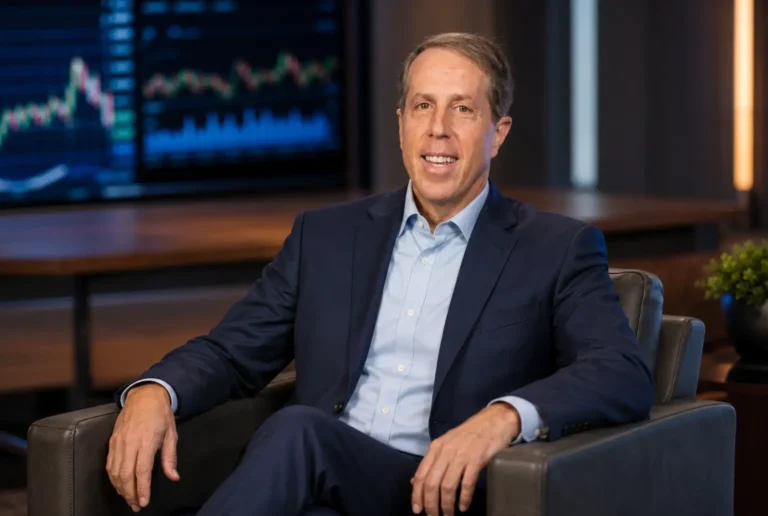
Paul Tudor Jones: Biography
Paul Tudor Jones II is an American investor, hedge fund manager, global macro trader, and philanthropist. He is best known as the founder of Tudor Investment Corporation and for anticipating the historic stock market crash of October 1987, commonly known as Black Monday.
Jones built his reputation through disciplined risk management, macroeconomic analysis, technical market observation, and a strong willingness to protect capital when a trade moved against him. His career has made him one of the most respected figures in modern trading history.
Early Life and Education
Paul Tudor Jones II was born on September 28, 1954, in Memphis, Tennessee, United States.
As a young man, he worked for his father’s business newspaper, the Memphis Daily News, where he wrote articles under the name “Paul Eagle.” This early exposure to business and economic information helped develop his interest in financial markets.
Jones attended the University of Virginia and graduated with a bachelor’s degree in economics. During his university years, he became increasingly interested in trading and market behaviour.
The Beginning of His Trading Career
After graduating, Jones began his career in the commodity futures industry. He first worked as a clerk on a trading floor, where he observed professional traders and learned how futures markets operated.
He later became a cotton futures trader under the guidance of experienced commodity trader Eli Tullis. This period taught Jones important lessons about discipline, position sizing, emotional control, and the speed at which losses can grow when risk is poorly managed.
His experience in commodity trading later helped him expand into currencies, interest rates, stock-index futures, and other global financial markets.
Founding Tudor Investment Corporation
In 1980, Jones founded Tudor Investment Corporation, which developed into a global investment-management firm specialising in macroeconomic and multi-strategy investing. The firm trades and invests across currencies, fixed income, equities, commodities, and related derivatives.
Jones became known as a discretionary global macro trader. Rather than focusing on only one market, he analysed the relationships among economic growth, inflation, interest rates, currencies, commodities, monetary policy, and investor sentiment.
This approach allowed him to move capital between different asset classes as global conditions changed.
Predicting Black Monday
Paul Tudor Jones achieved international recognition for anticipating the 1987 stock market crash.
Jones and his research partner, Peter Borish, studied historical market behaviour and compared the price pattern before the 1987 decline with earlier market crashes. They concluded that the US stock market was vulnerable to a severe correction.
Jones positioned his portfolio to benefit from falling equity prices by taking substantial Short positions.
On October 19, 1987, the Dow Jones Industrial Average suffered its largest one-day percentage decline in history. Jones’s fund reportedly generated an exceptional return that year, and his successful positioning established him as one of Wall Street’s leading macro traders.
His performance during Black Monday demonstrated the importance of historical analysis, market timing, independent thinking, and decisive execution.
Trading and Investment Philosophy
Paul Tudor Jones’s trading philosophy is centred on capital preservation.
He believes that a trader’s first responsibility is not to maximise profit but to remain financially capable of trading another day. This means cutting losses quickly, reducing exposure when market conditions become unclear, and avoiding emotional attachment to a position.
Jones does not assume that every trade will be correct. Instead, he focuses on controlling the size of each potential loss while allowing profitable positions to develop when market conditions support them.
His approach combines several forms of analysis:
Macroeconomic Analysis
Jones studies inflation, economic growth, monetary policy, interest rates, currencies, and capital flows to understand the broader market environment.
Technical Analysis
He also examines Price Action, trends, support and resistance, momentum, and historical market patterns to improve the timing of his entries and exits.
Market Psychology
Jones recognises that fear, greed, positioning, and investor expectations can influence prices significantly, particularly during periods of extreme volatility.
Risk Management and Capital Preservation
Risk Management is one of the defining principles of Jones’s career.
He is known for reducing positions rapidly when the market invalidates his original trading idea. Rather than waiting and hoping that a losing position will recover, he prefers to preserve capital and reconsider the opportunity from a more objective perspective.
This approach reflects an important principle: traders do not need to be right on every trade to become successful. They need to keep individual losses manageable and ensure that profitable trades are large enough to outweigh unsuccessful ones.
Jones also monitors the performance of his trading account closely. When experiencing a losing period, he may reduce Position Size until his decision-making and performance improve.
The Importance of Defensive Trading
Jones often describes himself as a defensive trader.
A defensive trader focuses first on what could go wrong. Before entering a position, the trader identifies the point at which the original analysis would become invalid and determines how much capital can reasonably be risked.
This approach prevents one incorrect market view from causing excessive damage to the portfolio.
For Forex traders, this means establishing a Stop Loss, selecting an appropriate Lot Size, and calculating the Risk-to-Reward Ratio before opening an order.
Trend Following and Market Timing
Although Jones is widely recognised for predicting a major market reversal in 1987, much of his trading philosophy is based on respecting trends.
He avoids fighting strong market momentum without convincing evidence that conditions have changed. He also uses moving averages, price behaviour, and market structure as references for identifying the direction and strength of a trend.
Jones believes that markets can move further than traders expect. Therefore, entering against a powerful trend simply because an asset appears expensive or cheap can be highly risky.
Emotional Discipline
Emotional control is another essential part of Jones’s success.
Large profits can create Overconfidence, while losses can create fear, frustration, and the desire for revenge trading. Jones attempts to prevent these emotions from affecting his Position Sizing and decision-making.
He treats trading as a probability-based activity rather than a test of personal intelligence. Being wrong about a trade is not considered a personal failure; it is simply a signal that the position should be reassessed or closed.
This mindset allows traders to respond to changing information without defending an outdated market opinion.
Robin Hood Foundation
In 1988, Jones helped establish the Robin Hood Foundation, an organisation focused on fighting poverty in New York City.
The foundation applies investment-style principles to philanthropy by evaluating programmes, measuring results, and directing funding toward organisations that can produce meaningful social impact. Its earliest grants supported programmes serving disadvantaged children and families.
The organisation has grown into an influential poverty-fighting charity supported by figures from finance, business, and other industries.
JUST Capital
Jones was also involved in establishing JUST Capital, an organisation that evaluates companies based on issues that Americans consider important, including fair pay, employee treatment, ethical leadership, environmental responsibility, and community impact.
The initiative reflects Jones’s belief that corporations should create value not only for shareholders but also for employees, customers, communities, and society more broadly.
Lessons Forex Traders Can Learn from Paul Tudor Jones
Protect Your Capital First
Profit opportunities will continue to appear, but traders cannot take advantage of them after losing too much of their capital. Risk control must therefore come before potential returns.
Cut Losing Trades Quickly
A trader should close or reduce a position when the original analysis is no longer valid. Holding a losing trade out of hope can turn a manageable loss into a major one.
Reduce Position Size During Losing Periods
When performance declines, trading larger positions usually increases emotional pressure. Reducing Lot Size can help traders regain discipline and confidence.
Combine Fundamental and Technical Analysis
Economic information can explain why markets may move, while Technical Analysis can help identify when to enter or exit a position.
Avoid Overconfidence
A series of profitable trades does not guarantee that the next setup will succeed. Every position should still follow the same Risk Management rules.
Remain Flexible
Successful traders change their views when market evidence changes. Loyalty should be given to the trading process, not to a prediction.
Legacy
Paul Tudor Jones is regarded as one of the most influential global macro traders of his generation.
His prediction of the 1987 crash became the most famous event of his career, but his long-term reputation is based on much more than a single successful trade. It reflects decades of disciplined risk control, macroeconomic analysis, market timing, and adaptability.
Through Tudor Investment Corporation, he helped shape the modern global macro hedge-fund industry. Through the Robin Hood Foundation and other initiatives, he also applied financial expertise to philanthropy and social development.
Conclusion
Paul Tudor Jones’s career demonstrates that success in trading does not depend solely on predicting market direction.
It requires disciplined Risk Management, emotional control, flexible thinking, careful Position Sizing, and the ability to act decisively when a strong opportunity appears.
For Forex traders, his most valuable lesson is simple: protect capital before pursuing profit. Traders who control their losses, respect market trends, and remain objective have a much greater chance of surviving and succeeding over the long term.
About the Author