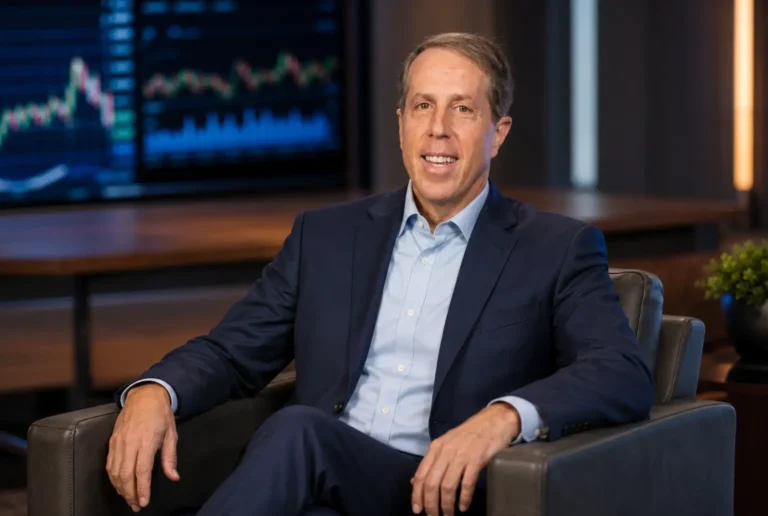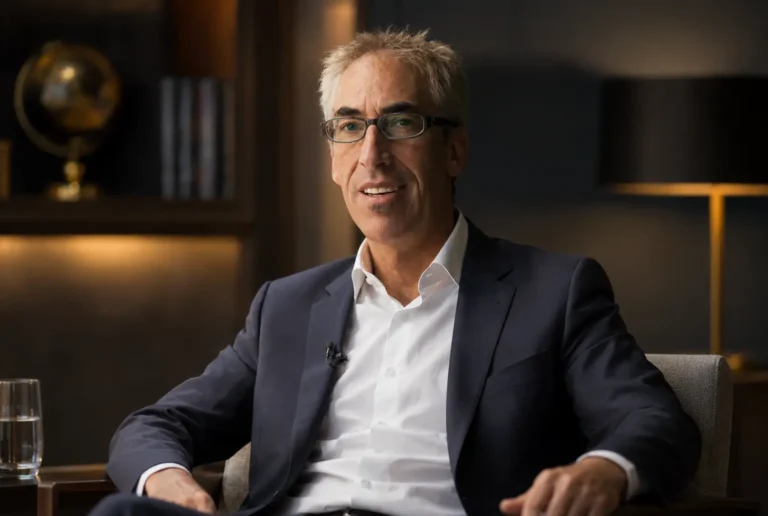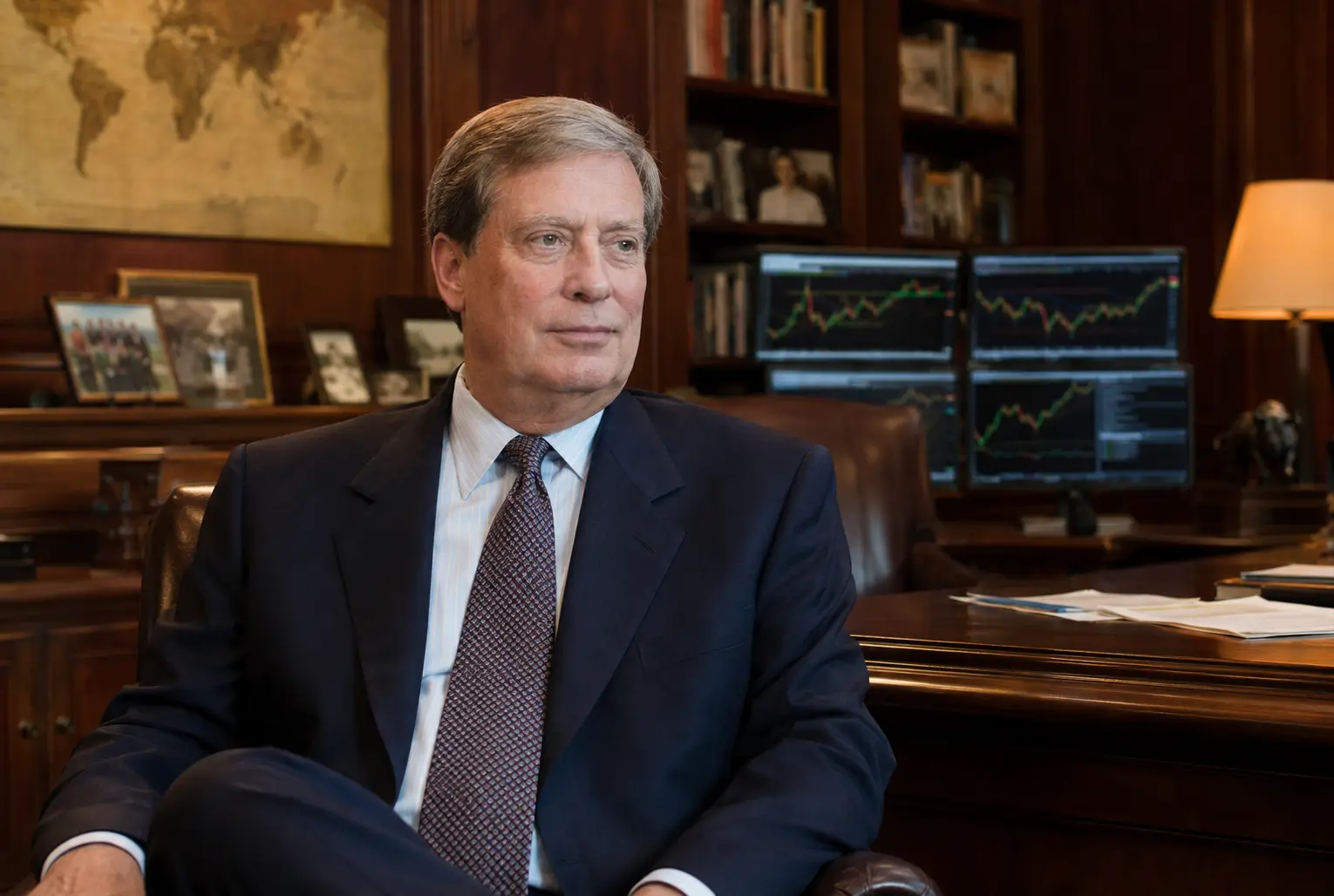
Stanley Freeman Druckenmiller is an American investor, former hedge fund manager, and philanthropist. He is widely regarded as one of the most successful global macro traders in modern financial history. He is best known for founding Duquesne Capital Management and for working alongside George Soros at the Quantum Fund.
Early Life and Education
Stanley Druckenmiller was born on June 14, 1953, in Pittsburgh, Pennsylvania. He spent part of his childhood in New Jersey and later lived in Richmond, Virginia.
In 1975, he graduated from Bowdoin College with degrees in economics and English. He later enrolled in a doctoral programme in economics at the University of Michigan but left before completing it to begin a career in finance.
The Beginning of His Financial Career
Druckenmiller began his financial career in 1977 as a management trainee at Pittsburgh National Bank. He initially worked as an analyst specialising in the oil industry and was promoted to head of the bank’s equity research group after only one year.
His ability to understand economic trends and identify investment opportunities quickly helped establish his reputation at an early stage of his career.
Founding Duquesne Capital Management
In 1981, at the age of 28, Druckenmiller founded Duquesne Capital Management.
He developed the firm into one of the most respected hedge funds in the industry. His strategy focused on global macroeconomic trends, including interest rates, currencies, commodities, equities, government policy, and international capital flows.
Unlike investors who spread their capital across many small positions, Druckenmiller often concentrated his portfolio in a limited number of high-conviction trades.
He managed Duquesne Capital until 2010, when he closed the fund and returned approximately $12 billion to investors. He later continued managing his personal wealth through Duquesne Family Office.
Working with George Soros
In 1988, George Soros recruited Druckenmiller to manage the Quantum Fund.
Druckenmiller served as the fund’s lead portfolio manager and later became Chief Investment Officer at Soros Fund Management. He remained with Soros until 2000.
Their partnership became one of the most famous in hedge fund history. Druckenmiller was responsible for identifying and developing major macroeconomic trading ideas, while Soros helped determine how aggressively the fund should size its positions.
Black Wednesday and the British Pound
Druckenmiller played a major role in the legendary trade against the British pound during the 1992 currency crisis known as Black Wednesday.
At the time, the United Kingdom was attempting to keep the pound within the European Exchange Rate Mechanism. Druckenmiller concluded that the currency was overvalued and that the Bank of England would struggle to defend its exchange rate.
He initially built a Short position against the pound. George Soros reportedly encouraged him to increase the size of the trade significantly.
When the British government withdrew the pound from the exchange-rate mechanism on September 16, 1992, the currency fell sharply. The Quantum Fund reportedly made more than $1 billion from the trade.
Although the event is often associated mainly with Soros, Druckenmiller was an important figure in developing and executing the trading strategy.
Investment and Trading Philosophy
Druckenmiller is known as a top-down global macro investor. He begins by analysing the broader economic environment before selecting individual assets or trades.
His analysis may include:
- Economic growth and inflation
- Interest rates and central-bank policy
- Currency trends
- Liquidity and capital flows
- Political and regulatory developments
- Market sentiment and technical price behaviour
Druckenmiller believes that traders should concentrate their capital when they identify an exceptional opportunity rather than trying to achieve returns through constant activity.
He also places strong emphasis on capital preservation. When market conditions contradict his original analysis, he is willing to reduce or close a position quickly rather than remain attached to it.
The Importance of Flexibility
One of Druckenmiller’s defining characteristics is his ability to change his market view rapidly.
He does not believe that traders should defend an earlier prediction simply because they have already committed money to it. When new information changes the investment outlook, the position should also change.
This flexibility allows him to trade across different asset classes, including currencies, stocks, bonds, commodities, and futures.
His approach demonstrates that successful trading is not about being correct all the time. It is about limiting losses when wrong and generating substantial returns when right.
Position Sizing and High-Conviction Trades
Druckenmiller is famous for taking large positions when he has strong confidence in a trade.
However, this does not mean taking uncontrolled risks. His position sizing is based on the quality of the opportunity, the strength of the evidence, and the potential relationship between risk and reward.
Rather than treating every trading setup equally, he allocates more capital to ideas with the strongest probability and the greatest potential payoff.
This principle became particularly clear during the British pound trade, when the Quantum Fund increased its exposure after becoming more confident that the exchange-rate system could not be maintained.
Closing Duquesne Capital
In 2010, Druckenmiller announced that he would close Duquesne Capital Management and return investors’ money.
The fund had approximately $12 billion under management at the time. Forbes notes that he subsequently continued investing through his family office.
The decision was not caused by a major financial collapse. Instead, Druckenmiller explained that the pressure of maintaining his exceptional performance had become increasingly difficult.
After closing the hedge fund, he continued to manage his personal fortune through Duquesne Family Office.
Philanthropy
Druckenmiller has also become a major philanthropist, supporting education, medical research, poverty reduction, and community development.
He has been closely involved with the Harlem Children’s Zone, an organisation that provides educational and social support to children and families in New York.
He has also supported neuroscience research and other educational institutions through substantial charitable donations.
Lessons Forex Traders Can Learn from Stanley Druckenmiller
Druckenmiller’s career offers several valuable lessons for Forex traders.
Follow the broader economic picture. Currency movements are heavily influenced by interest rates, monetary policy, inflation, and capital flows.
Protect capital first. Traders must control losses so that they remain financially capable of taking advantage of future opportunities.
Be flexible. A trader should change direction when the evidence changes rather than remain emotionally committed to an incorrect position.
Concentrate on high-quality setups. Not every market movement deserves a trade. Greater exposure should be reserved for opportunities supported by strong analysis.
Combine Fundamental and Technical Analysis. Druckenmiller primarily uses macroeconomic analysis, but he also considers market price behaviour and timing before executing a position.
Maximise profitable opportunities. When a trading idea is working and the evidence remains supportive, traders should manage the position effectively rather than closing it prematurely out of fear.
Legacy
Stanley Druckenmiller is regarded as one of the greatest global macro investors of his generation.
His reputation was built through decades of managing capital, adapting to changing economic environments, and identifying major opportunities across currencies, equities, bonds, and commodities.
His role in the 1992 British pound trade remains one of the most important chapters in Forex history. However, his broader legacy lies in his disciplined approach to Risk Management, flexible decision-making, and willingness to take meaningful positions when the probability is strongly in his favour.
Conclusion
Stanley Druckenmiller’s journey from a bank analyst in Pittsburgh to one of the world’s most respected investors demonstrates the importance of economic knowledge, discipline, adaptability, and decisive action.
He achieved success not by trying to trade every market movement, but by waiting for exceptional opportunities, protecting his capital, and committing strongly when the evidence supported his analysis.
For Forex traders, his career provides a powerful lesson: long-term success depends not only on predicting market direction, but also on managing risk, controlling emotions, adapting to new information, and knowing when an opportunity is strong enough to justify a significant position.
About the Author